
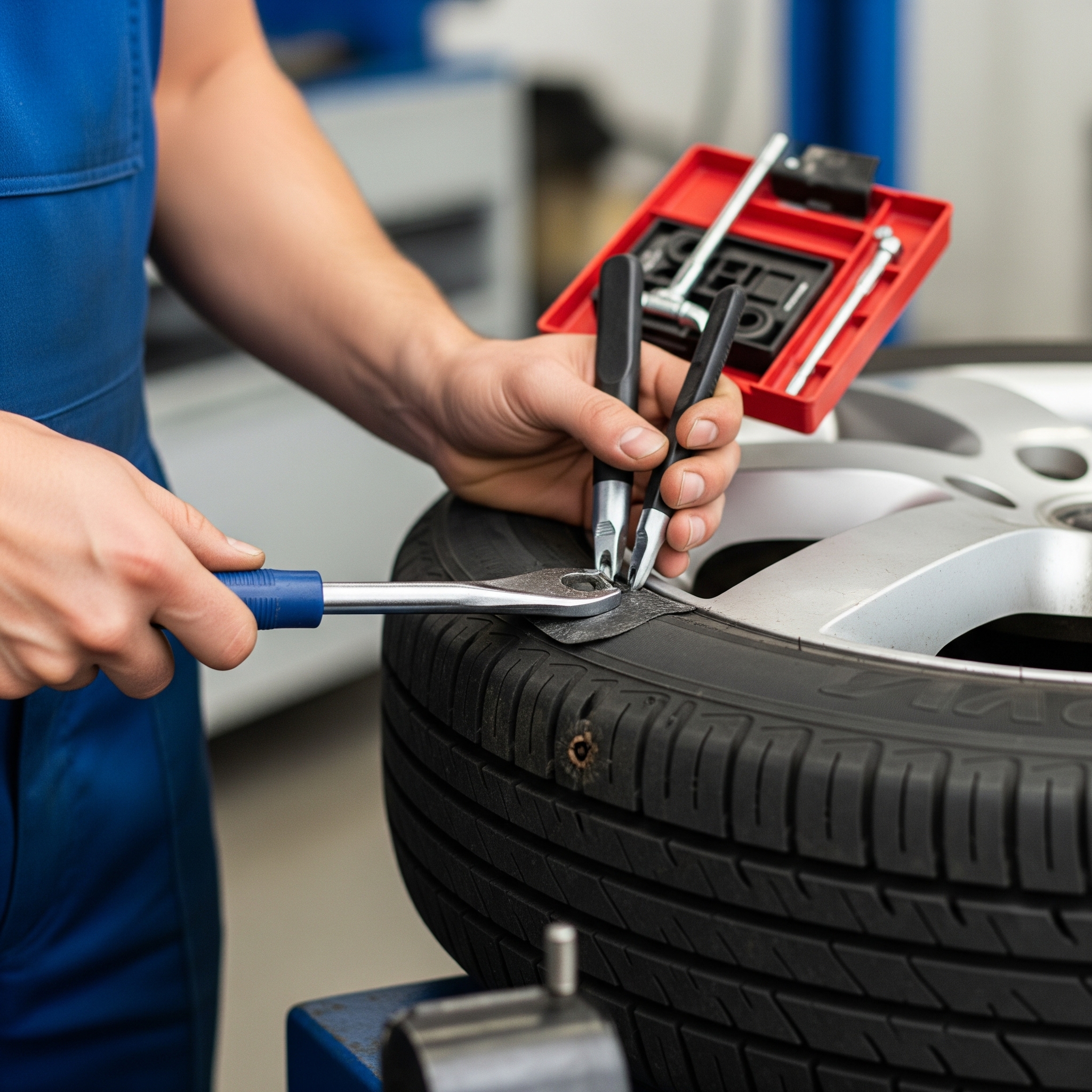


Puncture Repair Service
A tire puncture can be frustrating, but it often doesn’t mean you need a brand-new tire. Our Puncture Repair Service is designed to safely assess, repair, and restore the integrity of your tire, getting you back on the road quickly and affordably.
When Can a Puncture Be Repaired?
The possibility of repairing a puncture depends on several critical factors to ensure safety and reliability:
- Damage Location: The golden rule is that the puncture must be in the tire’s tread area (the flat top part of the tire that contacts the road). Damage to the tire’s shoulder or sidewall is generally not safely repairable due to the forces and flexing these areas endure.
- Hole Size: The hole should be no larger than approximately 6 mm (1/4 inch) in diameter. Larger punctures compromise the tire’s structure too much.
- Object Type: Small, sharp objects (nails, screws) are typically repairable. Cuts, tears, or damage caused by large or impacting objects are not.
- Tire Condition: The tire must not have been driven at low pressure or completely flat for an extended period, as this can cause invisible internal damage to the tire’s structure, making it unsafe even after an external repair. We also inspect for other structural damage (bulges, separations, cracks).
What Our Puncture Repair Service Includes:
Our repair process follows strict safety standards to ensure a durable solution:
- Thorough Inspection:
- We dismount the tire from the wheel rim to perform a complete internal and external inspection.
- We verify that the puncture meets the repair criteria (location, size, absence of internal damage).
- If the tire has damage beyond a simple repairable puncture, we will inform you and offer options for replacement.
- Damaged Area Preparation:
- Once repairability is confirmed, we clean and prepare the area around the puncture, both inside and out, to ensure optimal patch adhesion.
- A special tool is used to clean and smooth the puncture channel.
- “Plug-Patch” Application:
- We use a “plug-patch” type repair that fixes the hole from the inside of the tire and also seals the entry channel. This is the safest and most recommended way to repair a puncture.
- Vulcanizing cement is applied, and the patch is firmly adhered to the tire’s inner surface, hermetically sealing the area.
- Mounting, Inflation, and Balancing (Optional, but Recommended):
- Once the repair has set, we remount the tire on the rim and inflate it to the manufacturer’s recommended pressure.
- We strongly recommend re-balancing the wheel after any tire repair to ensure the wheel spins uniformly and prevent vibrations.
- Final Leak Test:
- We perform a dunk tank or spray test to ensure the repair is completely airtight and there are no air leaks.
Key Benefits:
- Restored Safety: A proper repair restores the tire’s safety, allowing you to drive with peace of mind.
- Cost Savings: It’s much more economical than replacing an entire tire that still has plenty of usable life.
- Sustainability: Extends tire life, reducing waste.
- Quick and Efficient: In most cases, the repair can be completed in a short amount of time.
If you’ve had a flat tire, do not attempt to repair it with temporary external emergency kits. Visit our shop for a professional inspection and a safe, lasting repair. Your safety is our priority!
Be the first to review “Puncture Repair Service”
Related products
Sale!
Original price was: $115.00.$99.99Current price is: $99.99.
Sale!

Tires
Original price was: $89.00.$59.99Current price is: $59.99.
Reviews
There are no reviews yet.