
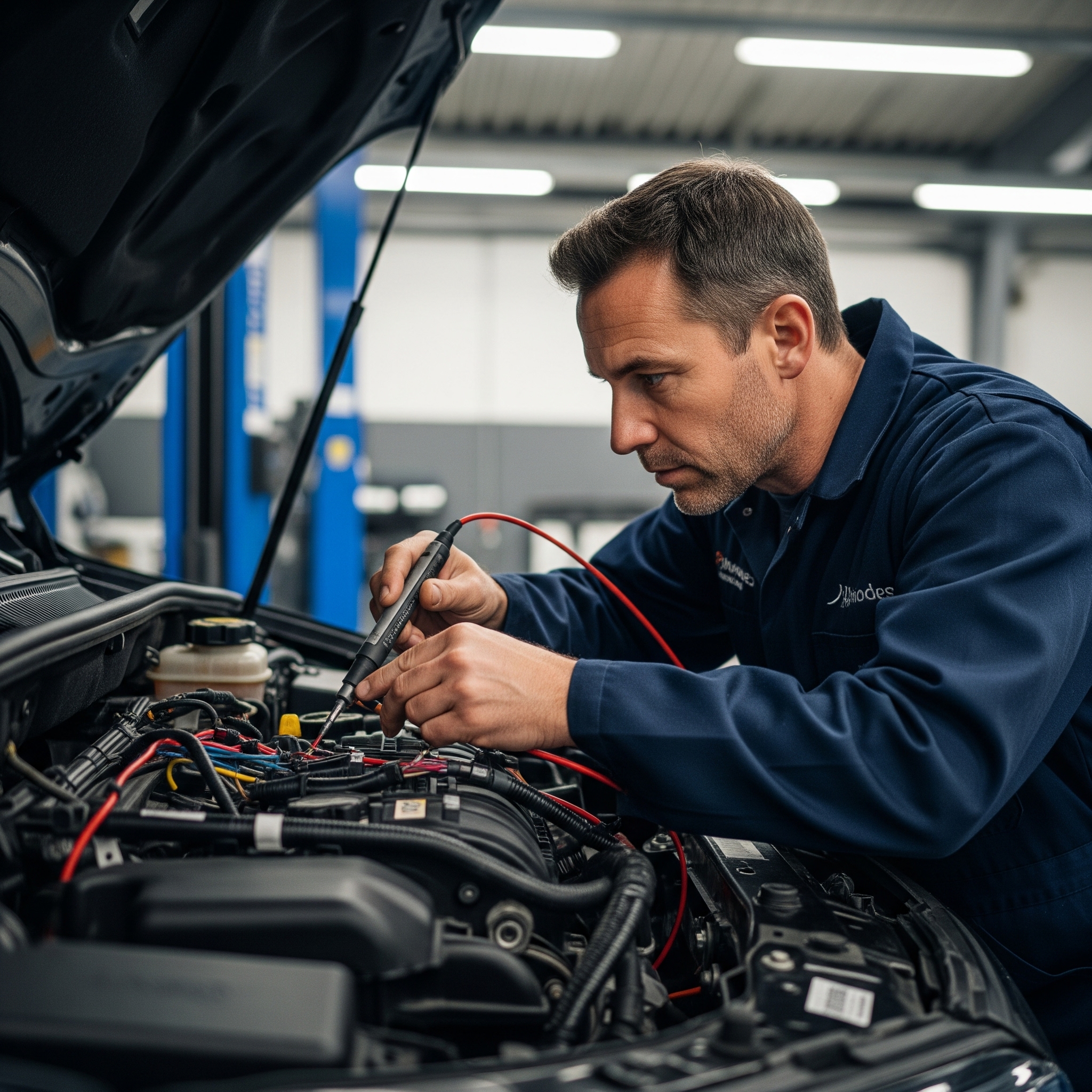

Electrical Fault Diagnosis and Repair Service
The electrical system of a modern vehicle is complex and essential for its operation. From starting the engine to powering the lights and infotainment systems, electricity fuels everything. Therefore, accurately diagnosing and repairing electrical faults is crucial to maintaining your vehicle’s safety, reliability, and performance.
Why is Accurate Diagnosis Important?
Electrical faults can manifest in many ways and affect various vehicle systems. Accurate diagnosis is fundamental to:
- Avoid Unnecessary Repairs: Pinpointing the root cause of the problem prevents replacing components that are working correctly.
- Save Time and Money: An accurate diagnosis leads to quick and efficient repairs.
- Ensure Safety: Electrical failures can affect critical systems like lights, ABS brakes, or airbags.
- Prevent Further Damage: Ignoring a minor electrical issue can lead to more severe and costly damage.
Common Symptoms of Electrical Faults:
Pay attention to these signs that indicate the need for a diagnosis:
- Starting Problems: The engine won’t crank, cranks slowly, or makes a “clicking” noise.
- Dim or Flickering Lights: Headlights, tail lights, or interior lights are dim or flicker.
- Frequent Blown Fuses: A fuse that blows repeatedly indicates a problem in the circuit.
- Burning Smell: A scent of burning plastic or rubber might indicate a short circuit.
- Non-functioning Accessories: The radio, power windows, door locks, or air conditioning don’t work correctly.
- Warning Lights: The “Check Engine” light, battery light, or other warning lights illuminate on the dashboard.
- Battery Drain: The battery frequently drains, even after long drives.
- Charging System Issues: The battery isn’t charging correctly, which can cause the vehicle to stall.
- Erratic Operation: The engine stalls, loses power, or runs rough.
Diagnostic Process:
A thorough diagnosis of electrical faults typically includes the following steps:
- Information Gathering: The technician will ask you about the symptoms, when they occur, and any recent repairs or modifications to the vehicle.
- Visual Inspection: Wires, connections, fuses, and other components are checked for damage, corrosion, or loose connections. The battery’s condition and its terminals are verified.
- Battery and Charging System Tests: A multimeter is used to check battery voltage and alternator output. A load test might be performed to assess the battery’s ability to maintain voltage under load.
- Fault Code Scanning: A scanner is connected to the vehicle’s computer (ECU) to read Diagnostic Trouble Codes (DTCs). These codes provide information about the general area of the problem.
- Circuit Testing: Wiring diagrams and tools like multimeters and test lights are used to check continuity, voltage, and ground connections in affected circuits. Voltage drop tests might be performed to identify resistance issues in wires.
- Component Testing: Individual components like switches, relays, sensors, and actuators are tested to verify their functionality.
- Wiring Diagram Analysis: Understanding wiring diagrams is essential for tracing circuits and pinpointing faults.
- Oscilloscope (in complex cases): In some complex cases, an oscilloscope might be used to analyze electrical signals and diagnose intermittent problems or sensor failures.
Electrical Fault Repair:
Repairing electrical faults can involve:
- Replacing faulty components: Batteries, alternators, starters, fuses, relays, switches, sensors, actuators, etc.
- Repairing or replacing wires and connectors: Fixing damaged wires, replacing corroded or broken wires, cleaning and tightening connections.
- Cleaning battery terminals: Removing corrosion from battery terminals.
- Repairing short circuits: Locating and repairing short circuits in the wiring.
- ECU programming or recalibration: After replacing certain components, reprogramming or recalibrating the ECU might be necessary.
Preventing Electrical Faults:
- Regular maintenance: Visually inspect wires, connections, and the battery.
- Replace battery when necessary: A battery’s lifespan is typically 3 to 5 years.
- Keep battery terminals clean: Clean corrosion with a baking soda and water mixture.
- Don’t overload the electrical system: Avoid using too many electrical accessories at once.
- Address minor issues immediately: Don’t ignore dim lights or accessories that aren’t working correctly.
If you experience any electrical problems in your vehicle, it’s important to take it to a trusted repair shop for professional diagnosis and repair. A trained technician can identify the root cause of the problem and perform the necessary repairs to get your vehicle back on the road safely and reliably.
Be the first to review “Diagnosis and repair of electrical faults.”
Related products

Mechanical Repairs

Mechanical Repairs
Reviews
There are no reviews yet.